
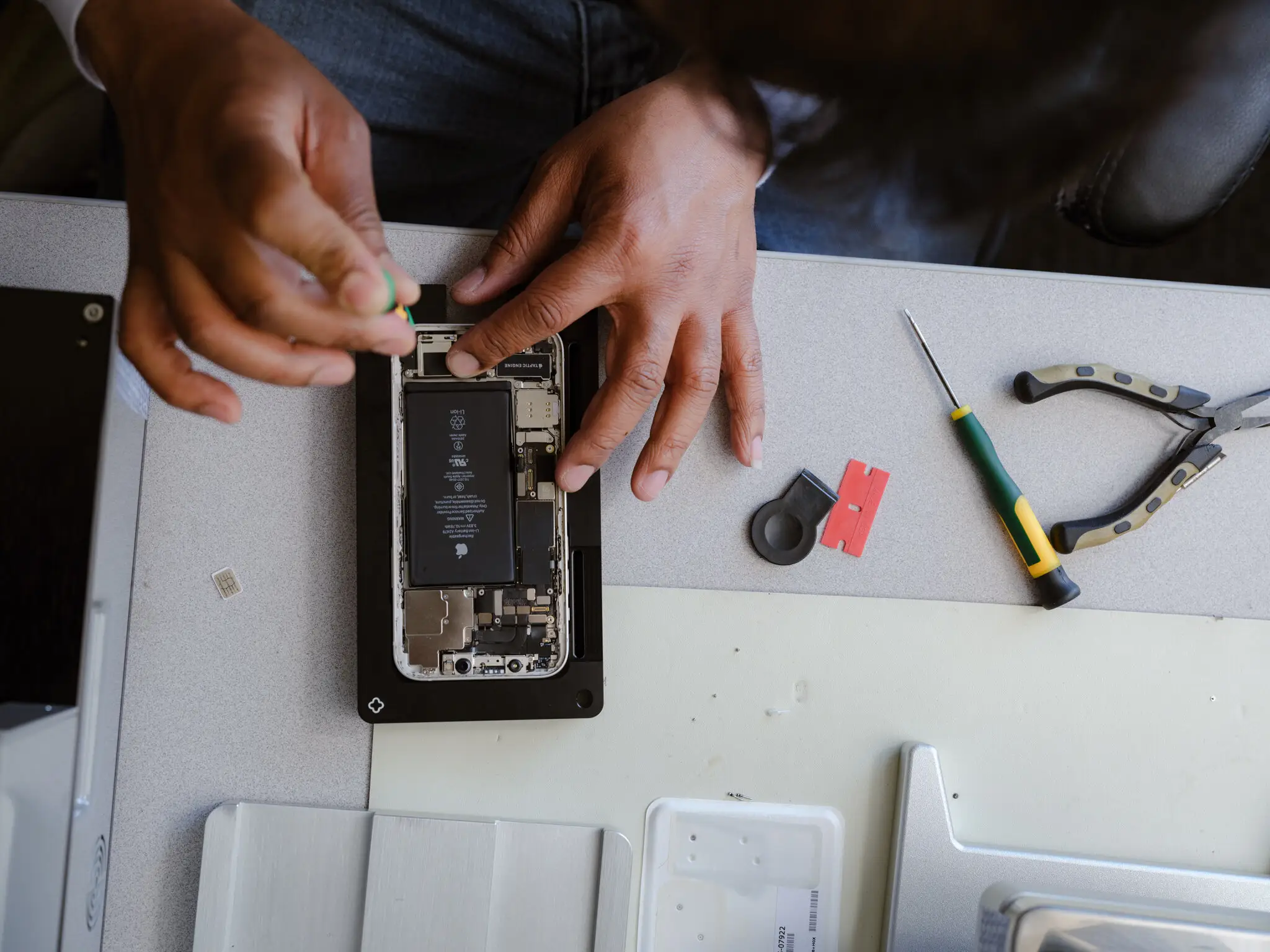
Apple A-Series Chip Upgrades: Do They Affect iPhone Repair Costs?
Every new iPhone generation brings a new A-series chip, with Apple usually highlighting faster performance, improved efficiency and more capable on-device features. But if you're thinking about the phone beyond its first year, another question matters: does having a newer chip make the iPhone more expensive or difficult to repair?
The short answer is usually not directly. For the repairs most iPhone owners actually need, the display, battery, charging port and physical design have a much greater influence on cost than the processor itself. However, a new chip can still have an indirect effect on the way a phone is designed, diagnosed and repaired.
The Chip Usually Isn't the Part Being Repaired
For common problems such as a cracked screen, worn battery or damaged charging port, the A-series processor isn't normally involved. These repairs replace or service separate components, meaning moving from one generation of Apple's chip to the next doesn't automatically make the repair more expensive.
For example, an iPhone with a newer A-series chip doesn't suddenly require a more expensive battery simply because the processor is newer. The price is influenced much more by the battery design, access to the component, replacement part availability and the overall construction of the phone.
The same applies to most screen repairs. The type and size of display, the complexity of the assembly and the cost of the replacement panel are much more important than whether the phone uses one generation of A-series silicon or another.
Where a New Chip Can Make a Difference
Although the processor isn't normally replaced, each new chip generation arrives alongside changes elsewhere inside the phone.
Internal layout is one example. Apple may reposition components, alter board layouts or change how different parts are packaged to accommodate new hardware. Even relatively small changes can affect how easily a technician can reach a particular component.
That doesn't automatically mean a new iPhone is harder to repair. In some generations, a design change can actually make a particular repair easier. The important point is that repairability depends on the complete internal design rather than the chip alone.
Power and thermal management can also change with a new processor. Improvements in efficiency may help reduce power consumption during certain workloads, while changes to heat management can influence the surrounding components. However, battery lifespan still depends on many factors, including charging habits, temperature, usage and the number of charge cycles.
New Features Can Matter More Than the Chip
One of the biggest reasons a new iPhone can become more complicated to repair isn't necessarily the processor itself. It's the new hardware introduced alongside it.
A new A-series chip may enable more advanced photography, AI processing or other features, but those capabilities can involve new cameras, sensors, microphones or other physical components. If one of those components fails, the repair cost is determined by that specific part and how it is integrated into the phone.
This is why comparing repair costs by chip generation alone can be misleading. Two iPhones with different processors can have very similar repair costs, while two phones with the same chip can have very different repair costs because their displays, cameras or internal construction are different.
Logic Board Repairs Are Different
The processor becomes much more relevant when a phone has suffered serious logic board damage.
Water exposure, severe drops, electrical faults or other forms of physical damage can affect components mounted directly to the logic board. These repairs require specialist equipment and model-specific knowledge, and they're considerably more involved than replacing a screen or battery.
A newer A-series chip doesn't necessarily mean a logic board repair will cost more, but newer devices can require technicians to become familiar with updated board layouts, components and diagnostic procedures.
For this reason, board-level repairs should be assessed individually rather than priced simply according to the age of the processor.
What Actually Determines iPhone Repair Costs?
If you're trying to predict the future repair cost of an iPhone, these factors are generally more useful than looking at the A-series chip:
- Display technology: More advanced or larger displays can make screen replacement considerably more expensive
- Model tier: Pro and Pro Max models often use more sophisticated hardware than standard models
- Part availability: Newly released phones can have higher parts prices while supply is still developing
- Internal construction: Adhesives, component placement and the overall design can affect labour time
- Damage severity: A cracked screen is very different from a phone with liquid or logic board damage
- Repair method: Component-level repair can sometimes be more economical than replacing a larger assembly
Should Repairability Influence Your iPhone Choice?
It can, but the A-series chip shouldn't be high on your list if repair costs are your main concern.
Instead, look at the model's display, battery design, parts availability and expected repair options. If you're comparing a standard iPhone with a Pro model, for example, the differences in display and camera hardware are likely to have a greater impact on future repair costs than the difference between their processors.
It's also worth remembering that newer models can initially be more expensive to repair simply because replacement parts are newer and less widely available. That situation can change as more devices enter the market and the parts supply becomes established.
The Bottom Line
A newer A-series chip doesn't automatically mean a more expensive iPhone to repair. For everyday repairs, the processor usually isn't the component being replaced, and other factors have a much greater influence on the final price.
Where the chip matters is indirectly — through changes to the internal design, power management, logic board and new features introduced alongside it.
At JD Phones, we diagnose the actual fault before recommending a repair, rather than assuming the most expensive component is responsible. Whether you're dealing with a battery issue, damaged screen, charging problem or more complex fault, you'll get a clear assessment of what's wrong and what your options are.
Need an iPhone repair or unsure whether your device is worth fixing? Get in touch with JD Phones in Newcastle, Sunderland or Heaton, or use our UK-wide mail-in repair service for free diagnostics and honest repair advice.
Frequently asked questions
Does a newer A-series chip make an iPhone more expensive to repair?
Not usually. The processor isn't involved in most common repairs, including screen replacements, battery replacements and charging-port repairs. Those costs are influenced more by the display, replacement part, internal construction, labour and availability. A newer chip can indirectly affect repair complexity if Apple changes the internal layout or introduces new hardware alongside it.
Which iPhone components have the biggest effect on repair costs?
The display is often one of the biggest factors, particularly on Pro and Pro Max models with more advanced screens. Cameras, batteries, charging assemblies and other specialised components can also affect the final price. The severity of the damage and availability of replacement parts are equally important when determining the cost of a repair.
Are newer iPhones harder to repair than older models?
Not automatically. Each generation can introduce changes to internal component placement, adhesives and construction, so some repairs may become more involved while others may become easier. Repairability depends on the complete design of the phone rather than simply how new its processor is.
Do A-series chips affect battery health?
They can have an indirect influence through power efficiency and thermal management, but the processor is only one factor. Battery age, charging habits, temperature, usage and charge cycles all contribute to battery degradation. A newer chip doesn't guarantee that a battery will last longer.
Are logic board repairs affected by the A-series chip?
They can be more model-specific because the logic board and processor architecture change between generations. However, the chip itself isn't necessarily what makes the repair expensive. Specialist equipment, technician expertise, board damage and the complexity of the fault are usually more important factors.
Should repairability influence which iPhone I buy?
Yes, but don't choose based on the A-series chip alone. If future repair costs matter to you, consider the model's display, construction, parts availability, repair options and the likelihood of accidental damage. These factors generally have a much greater impact on the cost of keeping an iPhone working long-term.
Repair decisions are easier with the right diagnosis
The right repair starts with a clear diagnosis. If your device is cracked, draining quickly, not charging, overheating, water damaged, or simply unreliable, JD Phones can inspect it, explain your options, and help you choose the repair that makes sense.