
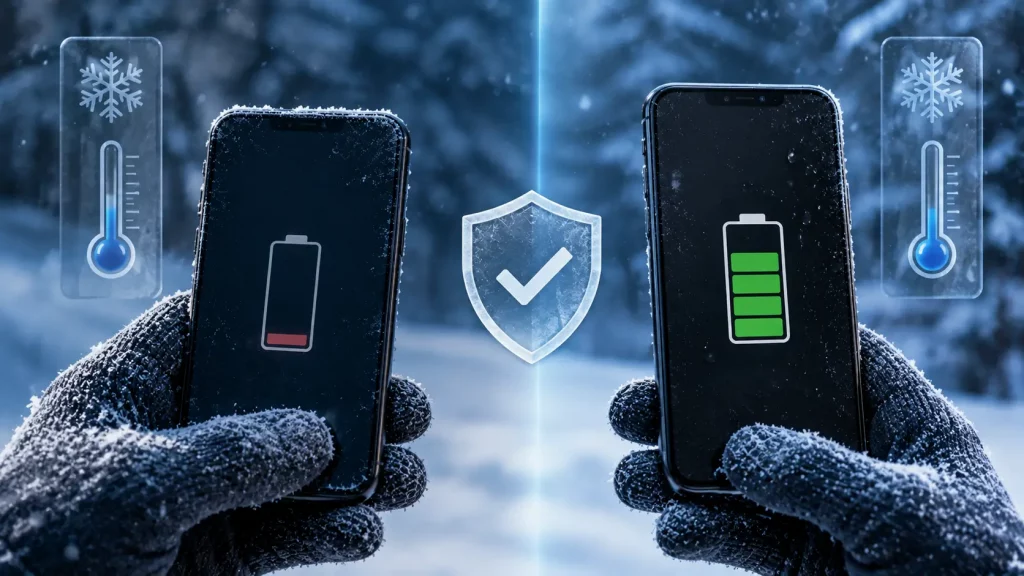
Winter Phone Care: Cold Weather, Battery Drain & Screen Problems
Cold weather can be hard on smartphones. If you've ever watched your battery percentage drop suddenly while you're outside in winter, you're not imagining it. Low temperatures can affect battery performance, touchscreen responsiveness and the way some phones behave during everyday use.
The good news is that you don't need to stop using your phone outdoors during winter. A few simple precautions can help reduce unexpected shutdowns, battery problems and avoidable damage.
Why Does Cold Weather Affect Phone Batteries?
Most modern smartphones use lithium-ion batteries. These batteries are designed to work across a range of temperatures, but their performance can temporarily decrease when they become very cold.
When a phone gets cold, the chemical reactions inside its battery slow down. This can reduce the battery's ability to deliver power efficiently. As a result, your phone may appear to lose charge more quickly, show sudden percentage drops or shut down earlier than expected.
Importantly, cold weather does not necessarily mean your battery has suddenly become permanently damaged. Some of the reduced performance is temporary and can improve once the phone returns to a normal temperature.
However, prolonged exposure to extreme temperatures should still be avoided.
Why Does My Phone Battery Drain Faster in Winter?
Cold temperatures are one possible reason for faster battery drain, but they aren't the only factor.
When you're outside, your phone may also use more power because of:
- Weak mobile signal
- GPS and navigation
- High screen brightness
- Camera or video recording
- Mobile data use
- Prolonged outdoor use
- Cold temperatures affecting battery performance
If your battery percentage drops dramatically while you're outside but returns to more normal behaviour after the phone warms up, temperature may be contributing to the problem. However, if your battery drains quickly indoors as well, particularly on an older iPhone or Android phone, battery degradation could be a more likely explanation.
Can Cold Weather Damage an iPhone or Android Battery?
Normal, short-term exposure to cold weather usually causes temporary battery performance changes rather than immediate permanent damage.
The bigger concern is prolonged exposure to very low temperatures or rapid temperature changes. If a phone becomes extremely cold and is then exposed to a warm, humid environment, condensation can potentially form.
For that reason, it's better to let a very cold phone return gradually to room temperature rather than trying to warm it up quickly.
Don't Warm a Cold Phone Too Quickly
If your phone has become very cold, allow it to return gradually to a normal indoor temperature.
Avoid placing it directly against a radiator, heater, hairdryer or other strong heat source. Rapid heating can create unnecessary temperature stress and may increase the risk of condensation when a cold device is brought into a warm environment.
If you're outside for a long period, keep your phone somewhere reasonably protected, such as an inside pocket, rather than leaving it exposed to the cold.
Cold Weather and Your Phone Screen
Modern smartphone displays are designed to operate across a range of temperatures, but extreme cold can affect how the screen behaves.
You may notice that touchscreen input feels slower or less responsive when the device is very cold. The display may also behave differently until the phone returns to a normal operating temperature.
Cold conditions can also make an already-damaged screen more concerning. If your phone has existing cracks or weakened glass, a drop or additional pressure could cause the damage to spread.
If your phone starts behaving strangely after being outside, allow it to return to room temperature before assuming that a permanent hardware fault has developed.
If the touchscreen remains slow, unresponsive or inaccurate after the phone has warmed up, it may need to be professionally checked.
What About Cracked Phone Screens in Winter?
Winter can make an existing screen problem more noticeable. A screen with a small crack is already compromised, and additional drops, pressure or impact can cause the damage to spread.
If the glass is sharp, lifting away from the display or shedding small pieces, avoid continuing to use the phone normally. Damaged glass can also expose the device to further contamination and moisture.
A good-quality protective case and screen protector can reduce everyday risks, although neither makes a smartphone completely drop-proof.
If your screen has already cracked, getting it repaired sooner can help prevent a small problem from becoming a more expensive repair.
How to Protect Your Phone in Winter?
A few simple habits can help protect your smartphone during colder months:
Can I Charge a Very Cold Phone?
If your phone is extremely cold, it's better to allow it to return to a normal temperature before charging.
Do not try to speed up the process by placing the phone directly against a radiator or using another strong heat source.
If the device displays a temperature warning or refuses to charge after being exposed to extreme temperatures, follow the manufacturer's guidance and allow the phone to return to a suitable operating temperature.
When Is Cold-Weather Battery Drain a Repair Issue?
Temporary battery drain in cold weather isn't necessarily a sign that your phone needs repairing.
However, if your phone is several years old and battery life has been getting worse regardless of the weather, it may be time to have the battery assessed.
Common warning signs include:
- Unexpected shutdowns
- Rapid battery percentage drops
- Poor battery life during normal indoor use
- The phone struggling to hold a useful charge
- Battery performance that has noticeably deteriorated over time
- The phone becoming unusually slow or unreliable when the battery is low
If these problems continue after your phone has returned to a normal temperature, the battery may be degraded or another hardware or software issue could be responsible. A battery replacement may be a sensible option when the rest of the phone is still in good condition.
Does Cold Weather Affect iPhones and Android Phones?
Both iPhones and Android smartphones use lithium-ion battery technology, so cold temperatures can affect battery performance on either type of device.
The exact behaviour can vary depending on the phone model, battery condition, software and temperature.
An older phone with a heavily degraded battery may show more noticeable problems in cold weather than a newer phone with a healthier battery.
If your iPhone or Android phone only experiences battery problems in very cold conditions, temperature may be contributing to the issue. If the same problems happen indoors at normal temperatures, the battery or another component may need checking.
Final Thoughts
Winter doesn't automatically mean your phone is going to fail, but cold temperatures can expose battery and hardware problems that may be less noticeable during warmer months.
Keep your phone protected, avoid extreme temperature changes, and pay attention to unusual battery behaviour. If your phone continues to drain quickly indoors, shuts down unexpectedly or develops persistent screen problems after warming up, don't automatically blame the weather.
A proper diagnostic can help identify whether you're dealing with normal cold-weather behaviour, an ageing battery, or another hardware fault.
If your iPhone or Android phone is struggling this winter, JD Phones can diagnose the problem and advise you on the most suitable repair.
Frequently asked questions
Does cold weather permanently damage an iPhone or Android battery?
Normal short-term exposure to cold usually causes temporary changes in battery performance rather than immediate permanent damage. Prolonged exposure to extreme temperatures should still be avoided.
Why does my phone shut down in the cold?
A cold lithium-ion battery may temporarily be unable to deliver power as effectively. If the available power falls below what the phone needs to operate, the device may shut down unexpectedly.
Why does my phone battery percentage go back up after warming?
Cold temperatures can temporarily affect the battery's ability to deliver power and the accuracy of the displayed charge level. Once the battery returns to a more normal temperature, the percentage may appear to recover.
Can I charge a very cold phone?
It's better to allow a very cold phone to return to a normal temperature before charging. Avoid heating the device rapidly with a radiator, heater or hairdryer.
Why is my touchscreen slow in winter?
Very cold temperatures can affect touchscreen responsiveness and other display behaviour. If the problem continues after the phone has warmed up, the device may need professional diagnosis.
Can I leave my phone in the car overnight during winter?
It's best to avoid leaving your phone in a very cold car for extended periods. If it has been exposed to freezing conditions, allow it to return gradually to room temperature before charging or heavy use.
When should I replace my phone battery?
If battery life has significantly deteriorated during normal use, or your phone is experiencing unexpected shutdowns and rapid percentage drops, a battery assessment can help determine whether a replacement is appropriate.
Repair decisions are easier with the right diagnosis
The right repair starts with a clear diagnosis. If your device is cracked, draining quickly, not charging, overheating, water damaged, or simply unreliable, JD Phones can inspect it, explain your options, and help you choose the repair that makes sense.